Walter Purl ‘Foots’ THOMAS
(February 10, 1907, Muskogee, OK – August 26, 1981, Englewood Cliffs, NJ)
Tenor and baritone saxophone, clarinet, flute, and arranger
In Cab Calloway’s orchestra from 1929 to 1943
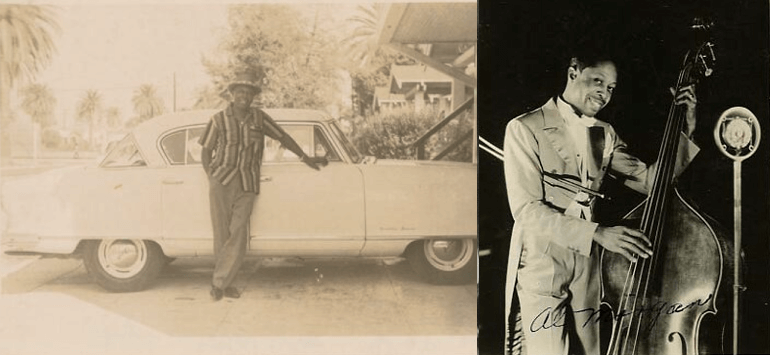
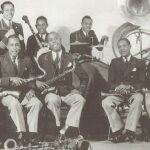
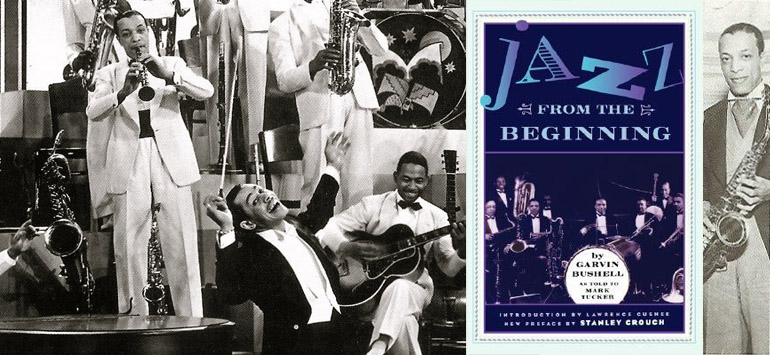
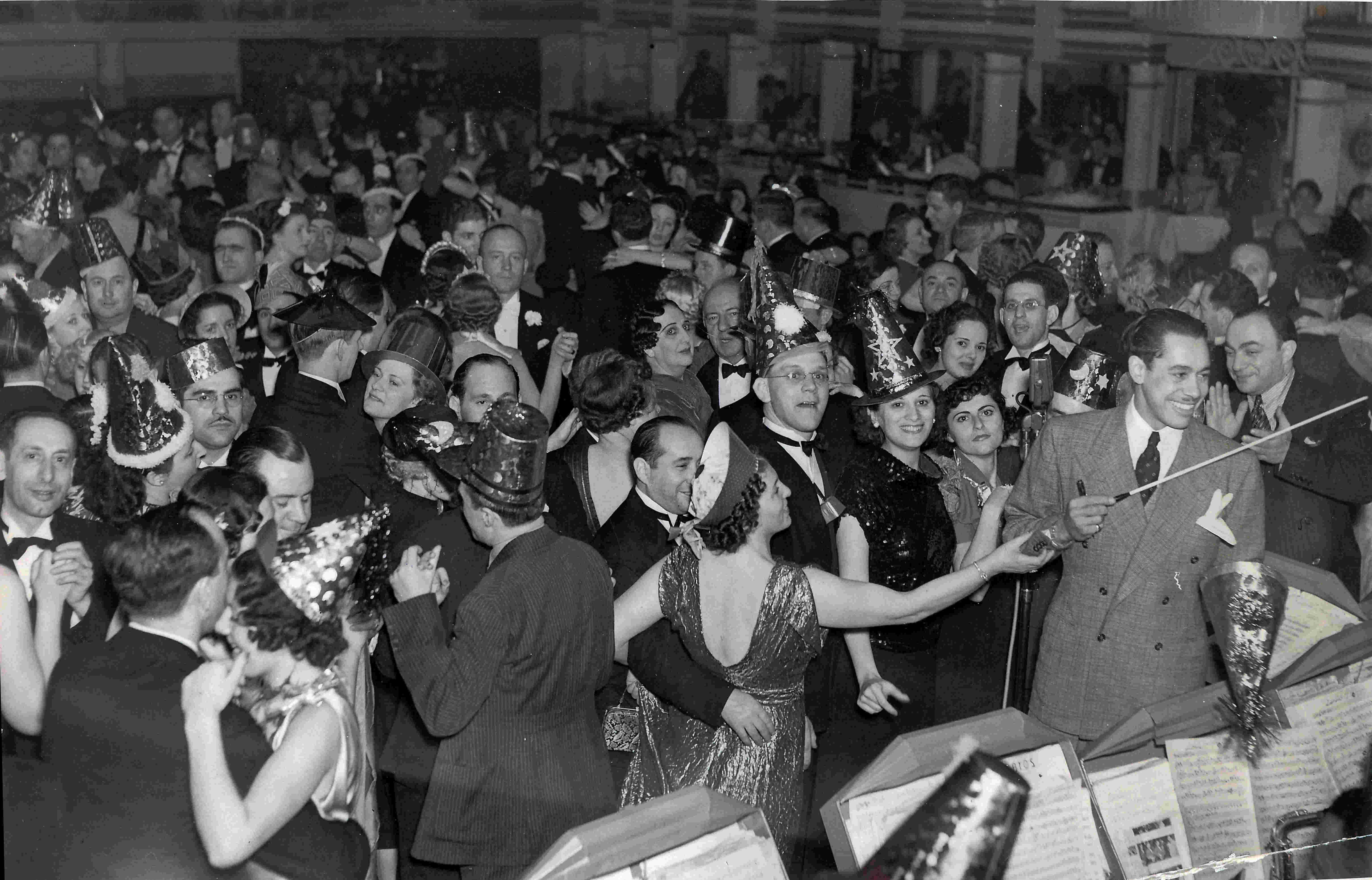
Here’s a 3-part portrait of one of Cab Calloway’s most loyal companions on the road, and yet we know precious little about him. Walter Thomas stayed with Cab from the Missourians days until after the filming of Stormy Weather. A giant with enormous feet (hence the nickname), he had already recorded with Fate Marable and Jelly Roll Morton before meeting Cab. For his entire tenure with Calloway, he was the band’s official arranger and musical advisor, but he never stepped out of the shadow of the great tenors who came through, Ben Webster and Chu Berry among them. The second half of his life is far from dull, either. The Hi De Ho Blog tells you more about this famous unknown, who has never been given more than ten consecutive lines in print…
A quiet childhood in Oklahoma
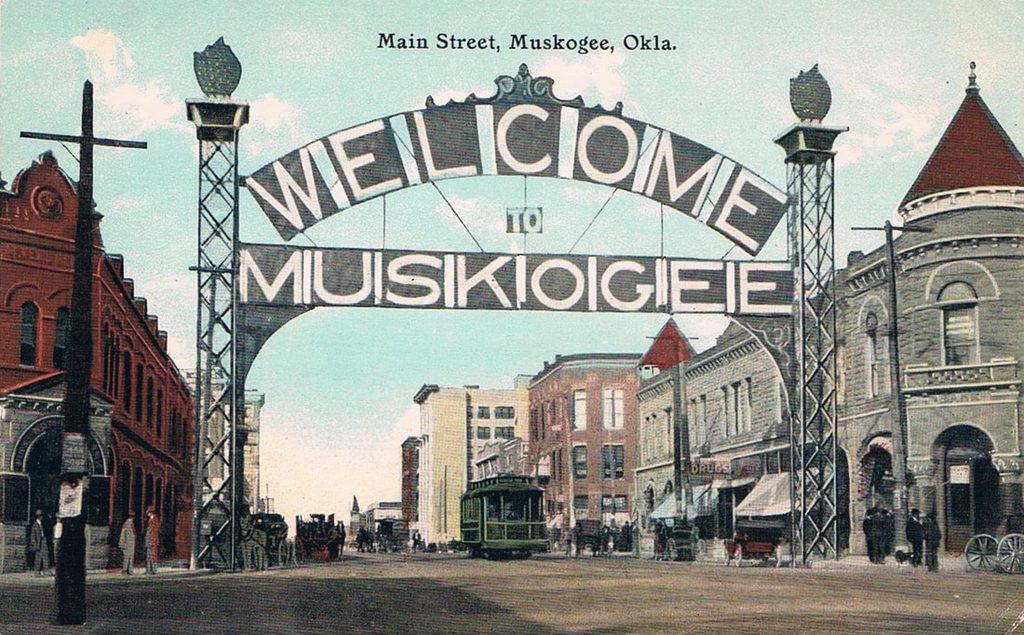
Walter Purl Thomas was born in Muskogee, a sleepy Oklahoma town of 25,000, best known for a country song (“We don’t smoke marijuana in Muskogee,” from Merle Haggard’s song, “Okie from Muskogee”) and as several other jazzmen’s hometown: Barney Kessel, Don Byas, and Aaron Bell, to name a few.
With his parents, Joseph and Maggie, who married in 1898, and his siblings, George, Cleora, and Joe, Walter grew up in the newly created 46th state, Oklahoma, in the Northern Indian Territory. The land was free, and opportunities seemed unlimited. Black and white were trying their luck there. A clan of Thomases and friends had built their own houses, and they lived comfortably. They lived on a mini-farm in the northern newly constructed area of Muskogee, Reeves’s Addition. The place had a garden bordered with flowers and fruit trees. The father worked as a houseman for a wealthy family. His principal task was milking the cows – which he also did for other families in the neighborhood – and taking care of the livestock. The mother, gifted in the kitchen, also had sewing skills and made dresses and other garments for neighbors and wealthy families in the area. Walter pitched in by milking their two cows, feeding the chickens or the three pigs, and tending the garden with his brother Joey, and he delivered the laundry bundles or the loaves his mother baked, using the family horse and wagon. He also served as taste tester for his sister Cleora’s culinary experiments and kept asking for his favorite, coconut cream pie. Cleora recalls the importance of food and taste for the Thomases in her book Cleora’s Kitchen (see the end of this section):
« My three brothers and I spent four or five weeks of each summer at our grandparents’ farm in Newby, Oklahoma, about twelve miles south of Bristow. We got thoroughly dirty playing in the barnyard and miserably scratched picking wild strawberries, blackberries, plums and possum grapes (as Grandpa called them), so that Grandmother could make her jams and jellies—and best of all, her exquisite wines. »
Walter’s brother, Joseph, Jr., aka Joe, born in 1908, would later play with Jelly Roll Morton and Blanche Calloway. In the 1940s, he became a vocal coach and went on to direct a number of rhythm and blues sessions for Decca.
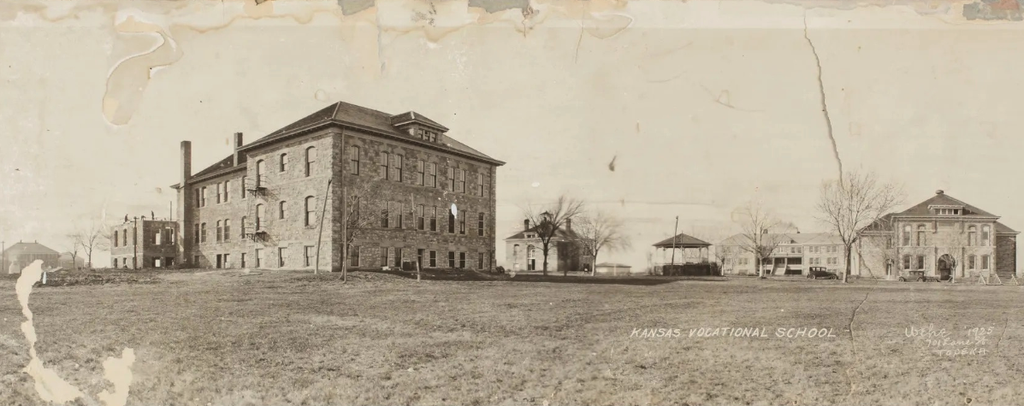
Walter’s father wanted him to become an architect, so he studied carpentry at the Kansas Vocational Institute in Topeka, a state-supported school for African Americans. Like any school, it had a band, and the band director was trombonist and future renowned composer William L. Dawson.
Music thrilled him, as did math, which he considered the key to understanding everything. He could sight-read the most complex arrangements, a skill that seems to have stemmed from his mathematical bent. « I discovered you can look at all of music through numbers (…) and that there were 96 ways to write a sequence of four notes, using the different inversions and intervals. »
Walter started on cymbals, then moved to piccolo and bugle horn. The young and gifted pupil began transposing piano parts so he could play his horn along with the piano.
« That’s when I first got involved with arranging, » he admitted in his interview with Milt Hinton for the Jazz Oral History Project (1981). He switched to saxophone (a C-melody) after trying one belonging to a schoolmate. « In three or four months, I was playing that saxophone good enough to play for a little school dance. Just from ear. » The next summer, when he got back home, he asked his mother to buy him a saxophone. Because saxophonists were hard to find, Walter easily landed gigs with local bands.
While still in school, Walter played on the basketball team, and players were sent to stay with local families during tournaments. He once stayed in St. Joseph, Missouri, at the home of Coleman Hawkins‘s mother. That is where the two met for the first time, when « Hawk » was already playing with Mamie Smith.
After finishing school with good grades in carpentry, Walter Thomas decided to stay on and work there under a tuition program, building houses on campus.
Just as he was finishing school, his reputation as a musician led someone in Topeka to mention him to Kid Carter, who led a four-piece band and needed a saxophonist. Walter got his first professional engagement in Minot, North Dakota. He then played dances and one-nighters, touring South Dakota, Colorado, and Canada.
Walter considered going to college and even registered in Moose Jaw, but as he put it, « when September came, I was making more money than I’d ever made. » He moved to Minneapolis instead and played with pianist Clarence Johnson at big dances around the Twin Cities. He took saxophone lessons there. It was also there that he first met Lester Young, who was touring with the family band.
He settled for a time in Cleveland, Ohio, where he met his future wife, Marlyne, a native of Lima, Ohio. It was also in Cleveland that he got his first union card.
On the Mississippi riverboats
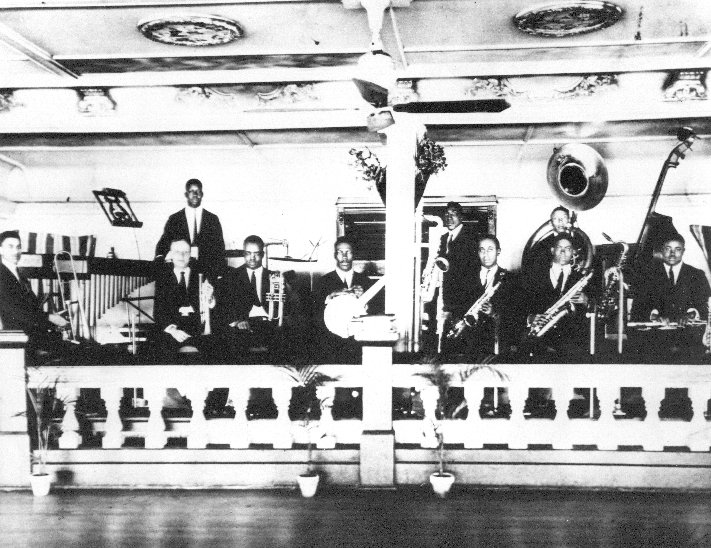
In 1920, Walter Foots Thomas was working with Ed Allen’s Whispering Band of Gold. Together with Norman Mason and Eugene ‘Honey Bear’ Sedric, he formed what is considered the very first jazz saxophone section. This polyphonic approach was a real innovation in New Orleans music and made the band famous. The group toured New Orleans schools to show off its new “concept.” The Buescher company even gave them a full set of saxophones so they could present their idea in St. Louis with the best instruments available.
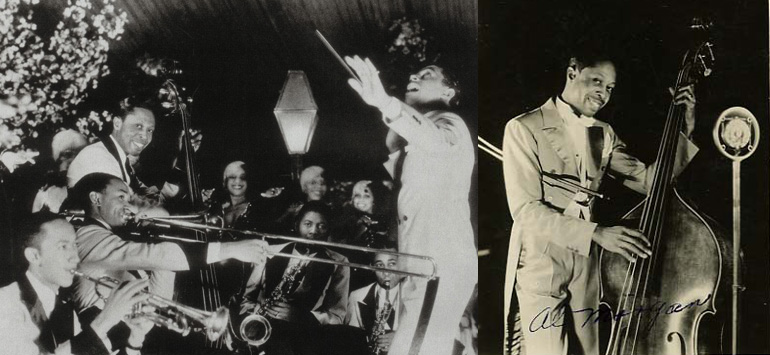
In 1924, Walter recorded with Fate Marable, the bandleader who played on the boats going up the Mississippi and trained so many musicians, Al Morgan among them. There, Walter Thomas became one of the first saxophonists, along with Joe Garland and Adrian Rollini, to take solos.
While the son was playing on the Mississippi River, in Oklahoma, the Thomas family moved to Tulsa in 1925, after the father found a job as a cook for a private family. Soon after, he went to work for the Mayo Furniture Company, while his wife, Maggie, was hired as a pastry chef at the newly opened Ambassador Tea Room. Their daughter Cleora took a job as a cook and a maid. Together, the family bought a two-story house on Kenosha Avenue. When the economic downturn of the late 1920s hit Tulsa’s African American community especially hard, Walter helped out by regularly sending money home.
Off to New York wiht Jelly ROll Morton and The Missourians…
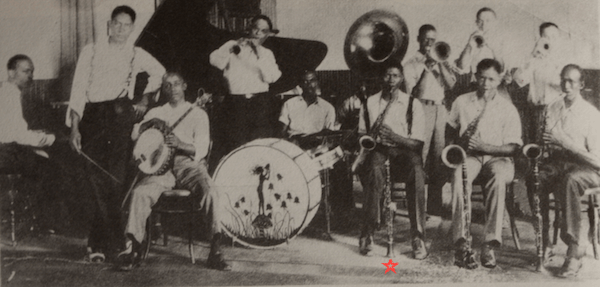
In 1925, Walter Thomas moved to New York, where he recorded for Columbia with Andy Preer’s Cotton Club Orchestra. In 1928, he joined Ferdinand « Jelly Roll » Morton’s band, the Levee Serenaders. His skill at sight-reading helped him land the job (he even drove the band bus!). He recorded with Morton again in 1929 and 1930 for Victor. Thomas counted Morton among his greatest influences, along with the Dixieland style.
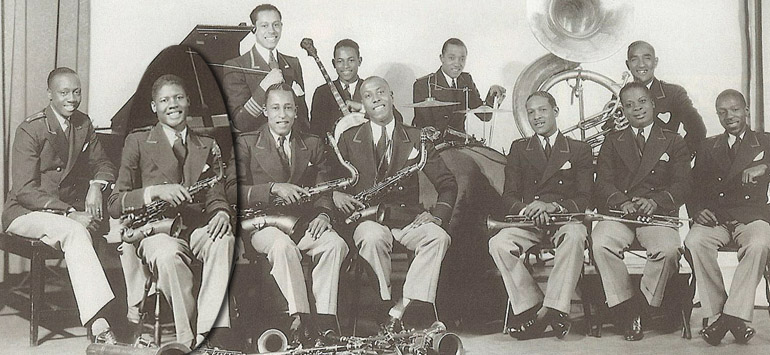
After stints with Luis Russell and Joe Steele (alongside Harry Carney), he joined the Missourians, replacing George W. Scott, the alto saxophone player who handled the musical direction until mid-1929. Walter Foots Thomas explains to Milt Hinton in his inestimable (and barely noticed by jazz historians) interview for the Jazz Oral History Project that George Scott, nicknamed Scotty, was sent to jail because of the Sullivan Act, a gun control law from New York, saying that the private possession of firearms without a license was a misdemeanor, and carrying them in public was a felony. Much bribery and injustice occurred then. And, for sure, whenever a Black person was arrested with a gun, “there was no bargaining. You got six months,” says Walter Foots Thomas. “So Scotty got involved with his wife or somebody in Harlem, and they caught him with a gun, and they put him in jail for six months.” Lammar Wright, friends with Foots from his teenage years, put a word to the other Missourians to get him in the band. It was supposed to be just a replacement. Walter Foots Thomas got his chair for good with the Missourians thanks to the compositions and arrangements he provided to the group:
“When Scotty got out of jail, he didn’t have no job. Because man, I got in there and I… And when I first got here, them guys were playing all head arrangements; I said, “You’ll got to be crazy. You got to write some of this stuff down. Because whoever comes in the band and has to play in somebody’s place has got to have something to play.” And I started to do a little writing, because I had just started to write”.
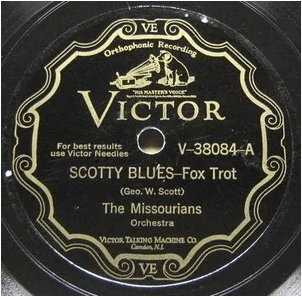
This means that George Scott is probably absent from the June 1929 session (and most certainly on the August 1’s with the Scotty Blues dedicated tribute!) and that’s Walter Foots Thomas, who only plays alto sax. He will change later to tenor after Andrew Brown got sick and he replaced him.
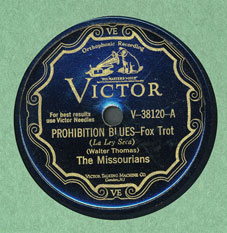
At their last session in 1930, The Missourians recorded a tune Thomas had written, “Prohibition Blues,” which foreshadows the soon-to-be-famous « Minnie the Moocher. » Foots Thomas would later arrange that very song, but more on that next time…
Read the second part on Walter Foots Thomas
(Editor’s note: full references and acknowledgments will appear in the final part.)