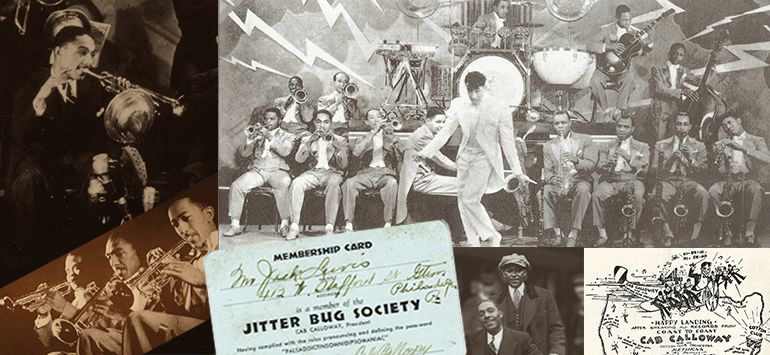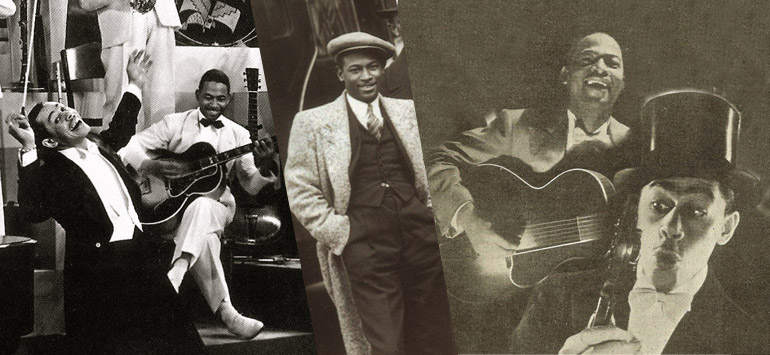
Is there a curse for the Cab Calloway’s musicians from the rhythm section? Like Cab’s first pianist, Earres Prince with Benny Payne, like guitar player Morris White with Danny Barker, like Al Morgan with bass player Milt Hinton, drummer Leroy… Read the full story →
Étiquette : cotton club
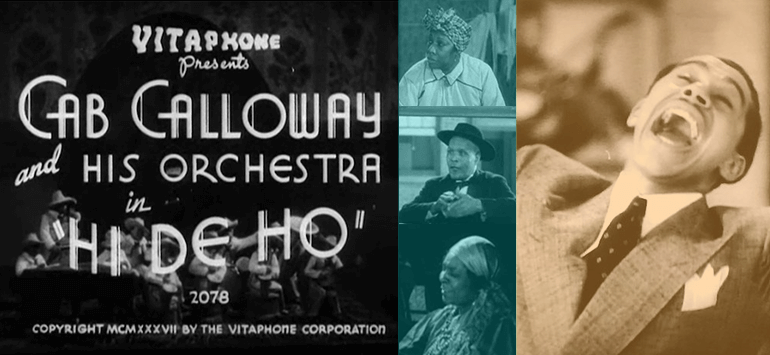
“Hi De Ho” is a Vitaphone movie released on February 20, 1937 by Warner Bros in the Melody Masters Series, that wonderfully demonstrates the musical qualities and stage persona of Cab Calloway and his musicians. But there’s more to know about… Read the full story →
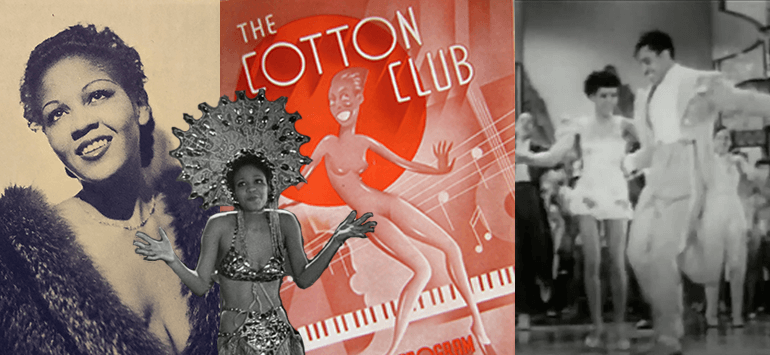
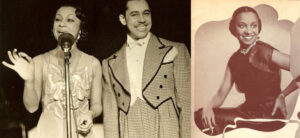
PART 2: After the closing of the Cotton Club. The end of a journey with one of those performers who made it on Broadway, on Harlem stages and now has to struggle when hard times come with age… Read the full story →
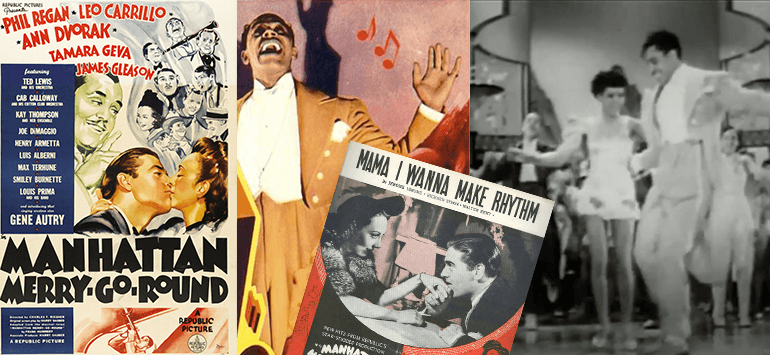
Appearing just a few seconds dancing with Cab Calloway in the movie Manhattan Merry-Go-Round (1937), this graceful, tall and jumping dancer remained unidentified until we asked jazz dance historian Harri HEINILÄ from Helsinki to help us. Then, with the name in mind, after several… Read the full story →
Among the cameos Cab Calloway did in several movies, this one for Manhattan Merry-Go-Round remains quite obscure and barely appears in people’s minds when talking about jazz on screen. Yet, this short sequence within a mediocre “filmusical” produced by the low budget… Read the full story →
Crowned “The King”, inspired by King Oliver, leader of his own band for a while, famous for composing Jitterbug, noted soloist on muted trumpet and high notes, Edwin Swayze is a musician who deserves to be rediscovered for his intense career… Read the full story →
Very little is known about Morris WHITE, Cab Calloway’s first rhythm guitarist and banjo player. While French critics seem to have appreciated his musicianship during the 1934 European tour, he attained little or no place in jazz literature. In the… Read the full story →
Billed alternately in the ads as “Sepia Prima Donna”, “The Sepian Nightingale”, “Siren of Songs”, “Songbird of the South”, “Bundle of Blues”, “Popular and petite songbird”, “The aristocrat of song”, “The Broadway Favorite and Singing Sensation”, “Second to Marian Anderson”… Read the full story →
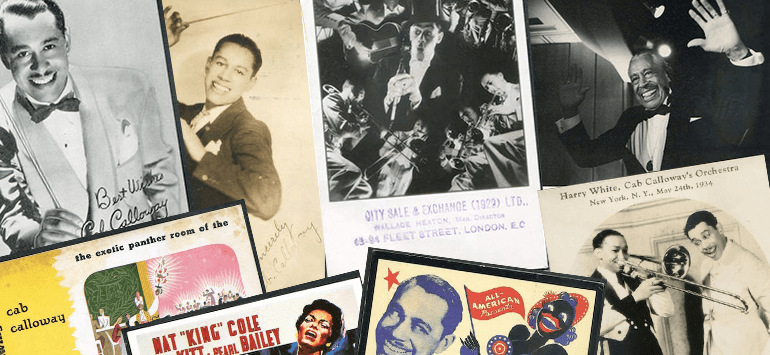
An overview of the bandleader’s appearances on private and commercial postcards from the collection of Keller Whalen. Read the full story →