Walter Purl ‘Foots’ THOMAS
(February 10, 1907, Muskogee, OK – August 26, 1981, Englewood Cliffs, NJ)
Tenor and baritone saxophone, clarinet, flute, and arranger
In Cab Calloway’s orchestra from 1929 to 1943
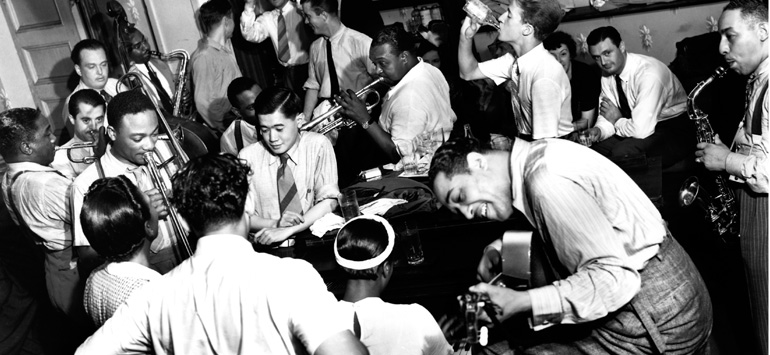
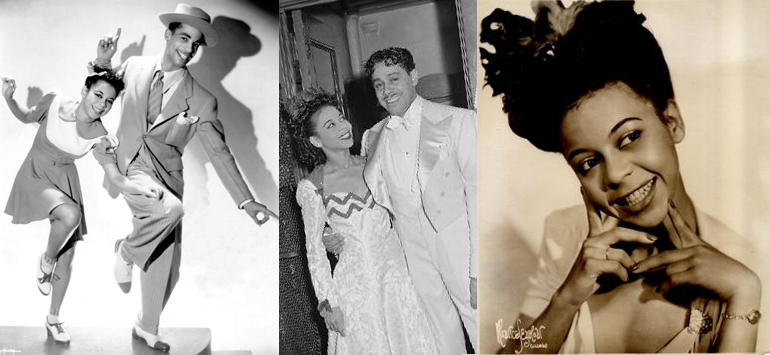
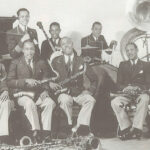
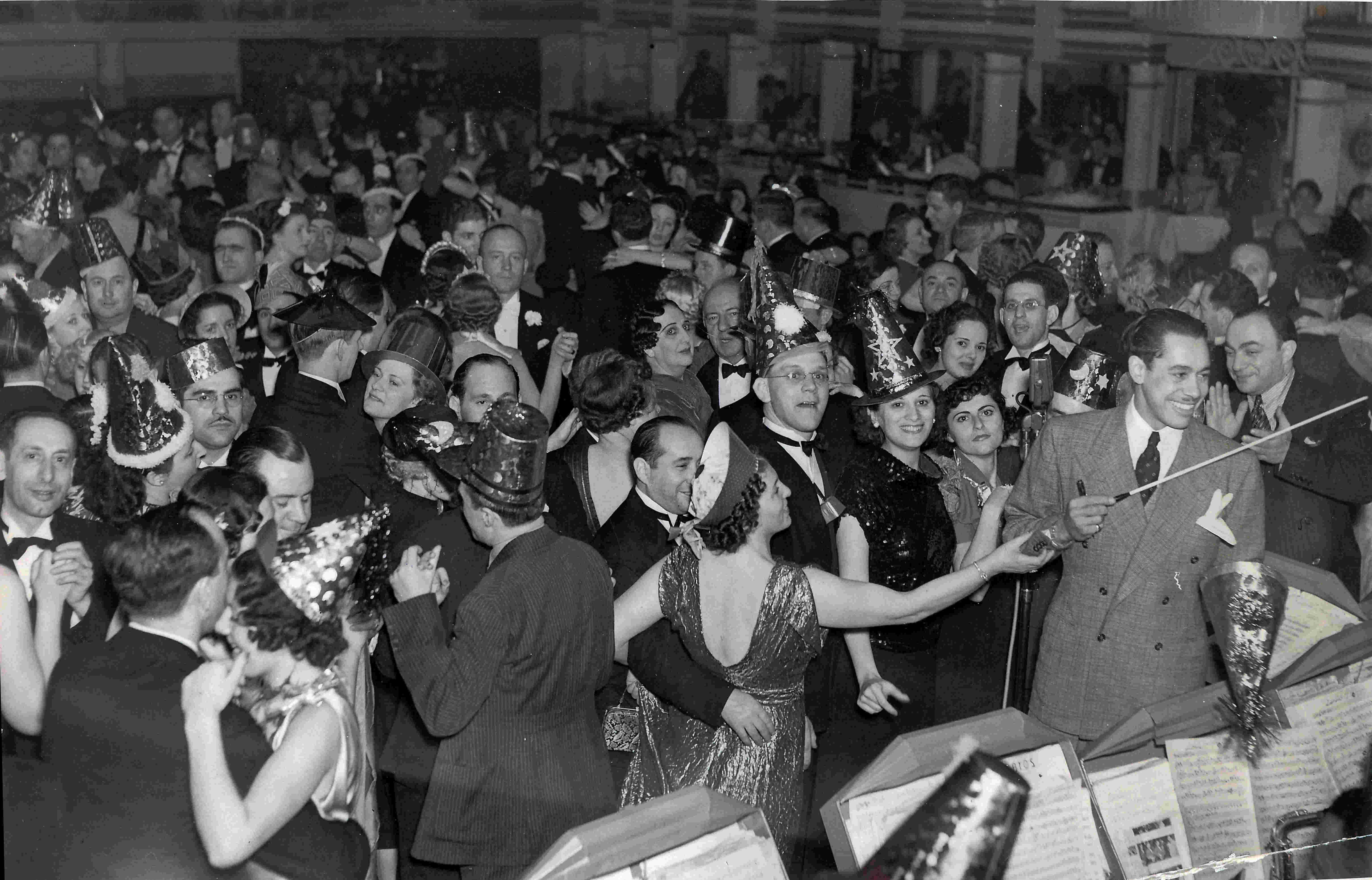
By the mid-1940s, only three of the original Missourians remained in Cab Calloway’s lineup: Lammar Wright (trumpet), Andrew J. Brown (sax), and Walter ‘Foots’ Thomas. In 1943, however, he succumbed to the lure of other opportunities and, shortly after filming « Stormy Weather, » left Cab’s band. Foots wanted to fly on his own, but he too would face the hardness of the times. However, the few tracks cut in 1944-45, as well as the moments he would still spend with some of the greatest, give the second part of his life a fantastic flavor.
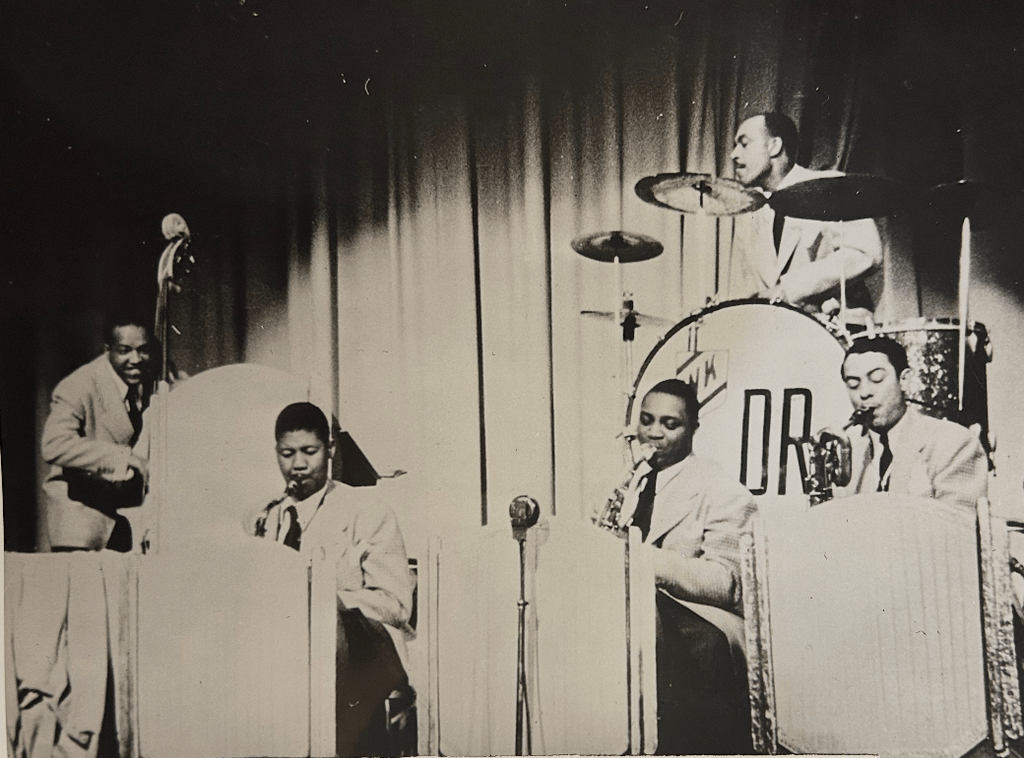
along with Jimmy Butts on bass, Wilbur Kirk on drums, Rudy Powell and Jerry Blake (August 1943)
With Don Redman… and Many Calloway Alumni
“Man, if you want a raise, always have somewhere to go, or you can’t get it, and you’re going to get fired,” bandmate Hilton Jefferson advised Walter Foots Thomas one day. That day arrived after Cab bawled Foots out. Foots had already met Don Redman, who offered him a better salary and promised: “Whenever you leave, you’ve got the job!”
Walter explained it to his friend Milt Hinton in a Jazz Oral History Project interview dated 1981, a few months before his death:
“So, you know, you had to give your notice on payday, or the first day after payday. So, payday I told Fess [Cab’s nickname among his musicians, for ‘professor’], I said, ‘Fess, I’ve got to give you my notice.’ ‘You can’t give me your notice!’ I said, ‘Why?’ ‘You’ve got to get somebody to take your place!’ Well, see, I was involved in getting musicians and all of that. But that’s just what he said! So I had to go out and find me a saxophone player who played flute and clarinet and piano — and I found Greely [Walton]. And that’s how I got out of the band. Because otherwise…”
It’s worth adding that Walter must have grown tired of always taking a back seat to the orchestra’s « stars. » The late solographer Jan Evensmo notes that Ben Webster and Chu Berry, among others, took all the solos (with such talent!), while Walter Thomas had to content himself with leading the saxophone section, serving as the orchestra’s principal arranger, and acting as second conductor after Cab. There were only a few short solos here and there, notably on flute, an instrument he was among the first to play in a jazz band.
In July 1943, for the opening of the new Café Zanzibar and to back Ella Fitzgerald, Don Redman brought together a band that included such well-known soloists as Irving ‘Mouse’ Randolph, Claude Jones, Jerry Blake, Rudy Powell, and Walter Foots Thomas, who replaced Kenneth Hollon. Powell would not join Cab’s band until the following year, but this was quite a carbon copy of the Calloway bandstand!
Thomas continued:
“So I went with Don, and I had a great experience with Don. That was great to work with him, because he was another giant. He could write, boy. Don Redman didn’t care nothin’ about the key of D and the key of E. It was just as easy to him as the key of C. And he wrote. And he could play, too. See, he played lead on all his arrangements. And he was a beautiful guy. I got close to him. I used to hang out with him when the gig was over. I’d go uptown with him… And he loved ice cream!”
The engagement at the Zanzibar for Don Redman lasted until the end of 1943. During that time, Thomas recorded a few tracks with the band, released exclusively on V-Discs.
But Thomas had other projects in mind…
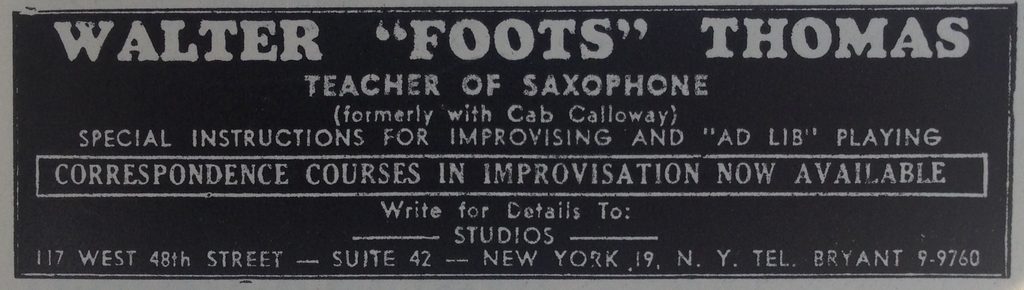
The Studio at 117 West 48th Street
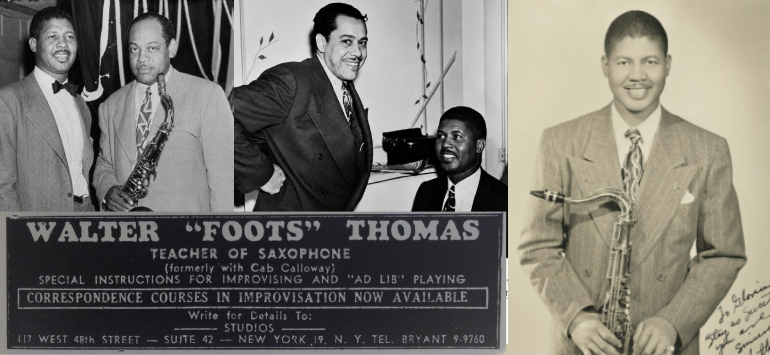
“Walter ‘Foots’ Thomas (Formerly with Cab Calloway for 14 Years) — Saxophone Instruction” was the wording used to advertise Foots’s new place: his studio, Suite 42, 117 West 48th Street, in midtown Manhattan.
He shared this studio with drummer Cozy Cole, also a former member of Cab’s band. David Holmes, who interviewed him in 1978 for his book *Jazz Greats* and also took lessons with Walter Thomas, states: « Thomas’s long experience with top-flight orchestras had made him an expert in section playing. His teaching emphasized tonality, attack, breath control, and phrasing. With his solid foundation in music theory and vast knowledge of classical, jazz, and popular music, he was also a great innovator, and may very well have been the first music educator ever to attempt to teach improvisation. » At that time, most other musicians believed that improvisation was an innate talent that could not be taught. True to himself, Walter Thomas continued to take saxophone lessons — probably with Joe Napoleon, brother of Marty — in the same building where he taught, every morning before his own classes began.
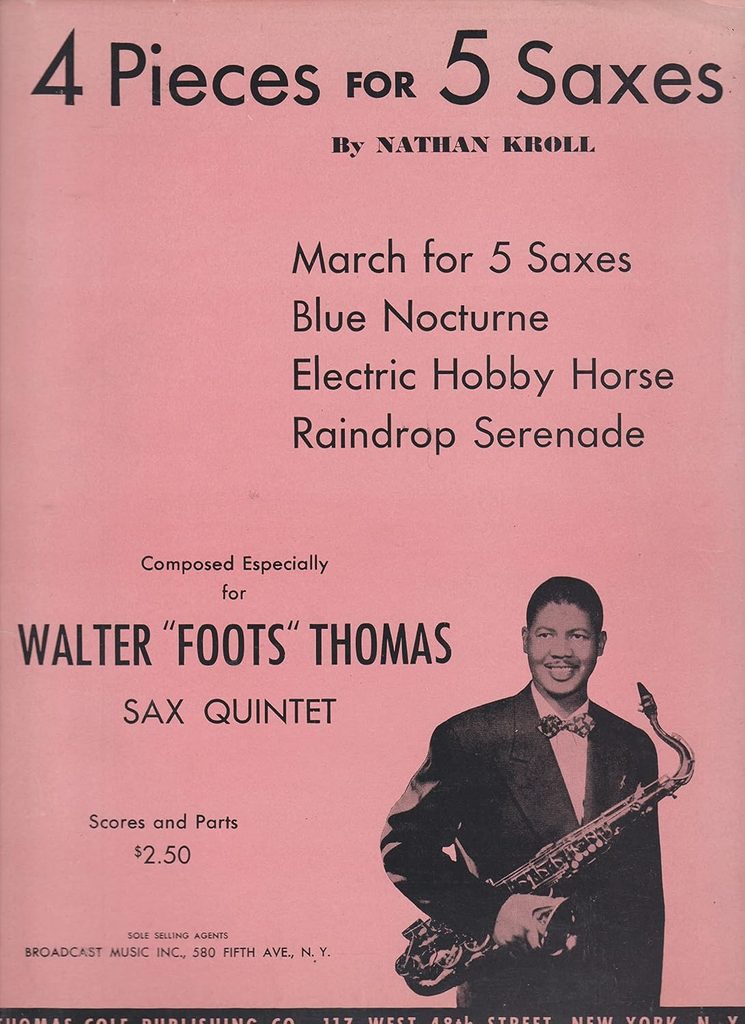
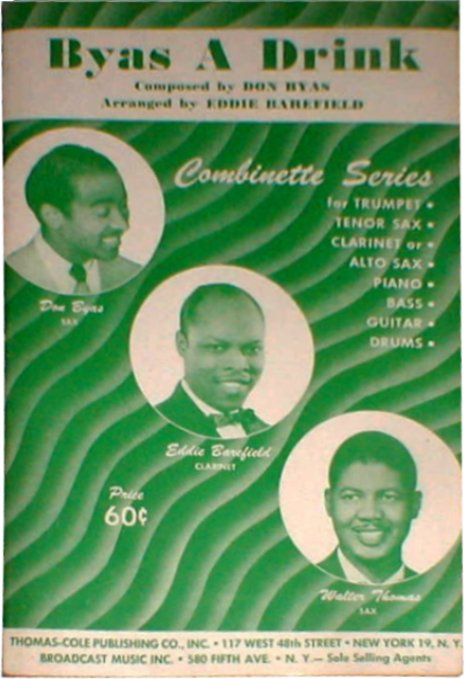
During this period, he was also associated with Cozy Cole in music publishing, allowing him to publish a few pieces of sheet music and manuals for sax players.
Enthusiasm ran high, but the pay was low: it could take a full day of lessons to earn $50.
Yet among Walter ‘Foots’ Thomas’s students were Freddie Webster (trumpet), Al Jorden (trombone with the Bob Crosby orchestra), Sonny Rollins (tenor sax — yes, the Saxophone Colossus!), Bud Shank (alto sax), Jackie McLean (alto sax), and Ornette Coleman (alto sax, sent there by his step-uncle, Doc Cheatham). Quite a lineup, isn’t it?
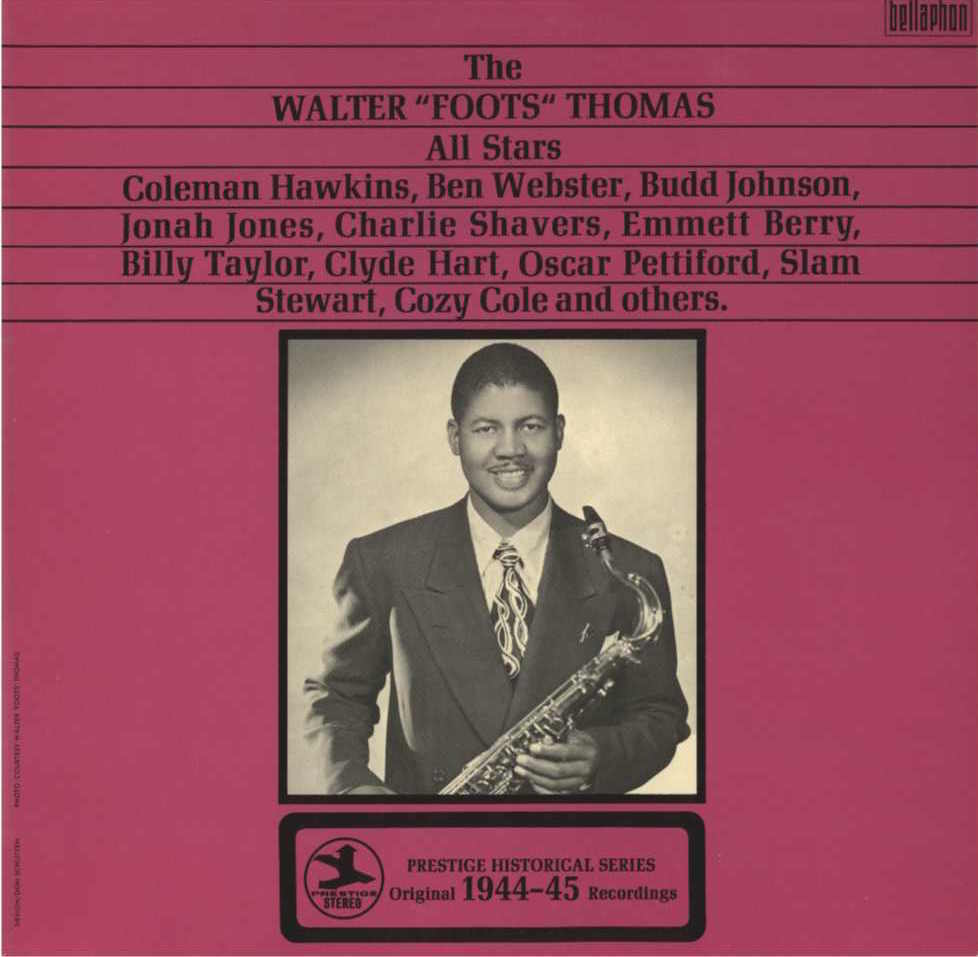
A Dream All-Star Lineup at the Feet of the Humble ‘Foots’
In 1944, Walter formed his own group, the Jump Cats, with whom he secured a six-month engagement at the Zanzibar Club in New York and recorded for the Joe Davis label.
In total, 31 tracks were recorded over four sessions between April 1944 and June 1945. This allowed Foots to reunite with some of his old friends from the Cab era, along with a few other notable names (only for 1944):
• April 1, 1944: Emmett Berry (trumpet), Ben Webster (tenor sax), Walter « Foots » Thomas (tenor sax, alto sax), Budd Johnson (tenor sax, baritone sax), Clyde Hart (piano), Oscar Pettiford (bass), Cozy Cole (drums).
• October 11, 1944: Jonah Jones (trumpet), Eddie Barefield (clarinet, tenor sax), Hilton Jefferson (alto sax), Coleman Hawkins, Walter « Foots » Thomas (tenor sax), Clyde Hart (piano), Milt Hinton (bass), Cozy Cole (drums).
These tracks, recorded for the Joe Davis label, are considered prime examples of pure swing. Foots Thomas clearly knew how to gather the right people and undoubtedly put a great deal of work into his arrangements. The April 1, 1944 session took place right at the end of the recording ban. It was Joe Davis who asked Walter Thomas to put this group together for the occasion. “I tried to get the best I could find, and they were all very cooperative,” Walter Thomas explained on the back of the LP sleeve. He had gathered around him many of his former bandmates from Cab’s band: Ben Webster, Cozy Cole, Hilton Jefferson, Doc Cheatham, Jonah Jones, and Milt Hinton. And, from session to session, Thomas was able to expand the saxophone section until, as he put it, he had “my very own section.”
In the meantime, he had supervised Thelonious Monk’s first recording session on October 19, 1944, with Coleman Hawkins (tenor sax), Edward ‘Bass’ Robinson (bass), and Denzil Best (drums). As A&R (Artist & Repertoire — the person responsible for identifying new talent and overseeing all artistic matters) for the Joe Davis label, Walter Thomas then acquired the publishing rights, an unorthodox method but one that was fairly common at the time, in exchange for organizing the session. After that, however, he no longer worked for the Joe Davis label.
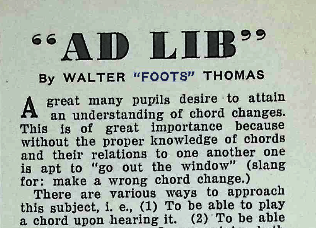
The “Ad Lib” Column in “The Orchestra World”
In May 1944, Walter Foots Thomas advertised his studio in the trade magazine The Orchestra World, using for the first time the line “Special Instructions for Improvising and ‘Ad Lib’ Playing.” This coincided with the launch of his column “Ad Lib,” aimed at jazz musicians. Thomas rejected the view that improvisation could not be taught. Drawing on his experience as both a musician and a teacher, he identified rhythm, chord changes, and tone quality as the key sticking points, arguing that no single method fit every student. He also, shrewdly, offered a correspondence course through his studio for musicians outside New York.
His experience writing about music for The Orchestra World would last until February 1947 and would give him the confidence to write for another magazine.
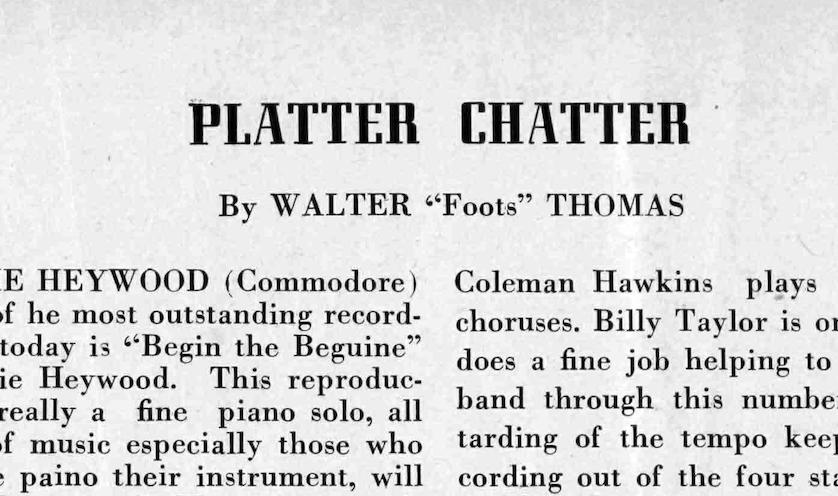
The “Platter Chatter” Column in “Music Dial”
Music Dial (Harlem, 1943–1945), edited by pianist Ray Parker, was a militant Harlem-based monthly fighting racial discrimination in the music industry and beyond. Alongside political editorials, it covered Black musicians’ activities through nationwide correspondents and columns on saxophone and trumpet technique. From June 1944 until the magazine’s final issue, saxophonist Walter ‘Foots’ Thomas ran a second column, in addition to the one for The Orchestra World, titled “Platter Chatter,” reviewing new record releases. He used his own star rating scale, from Excellent to Bad. In the July 1944 issue, Thomas reviewed a Coleman Hawkins session he himself had directed, with the Hawk in the company of Cab Calloway’s musicians: Jonah Jones, Hilton Jefferson, Milt Hinton, Cozy Cole, and Eddie Barefield, plus Clyde Hart on piano. Foots gave a first-hand account of the mood during a jam session among bandmates who had known each other for years, with jokes before the session began and focused respect once the recording started.
Running from June 1944 through Music Dial’s final issue, the column’s pages also carried advertisements for his own music studio, making it both a trusted record review outlet and a promotional platform for his teaching venture.
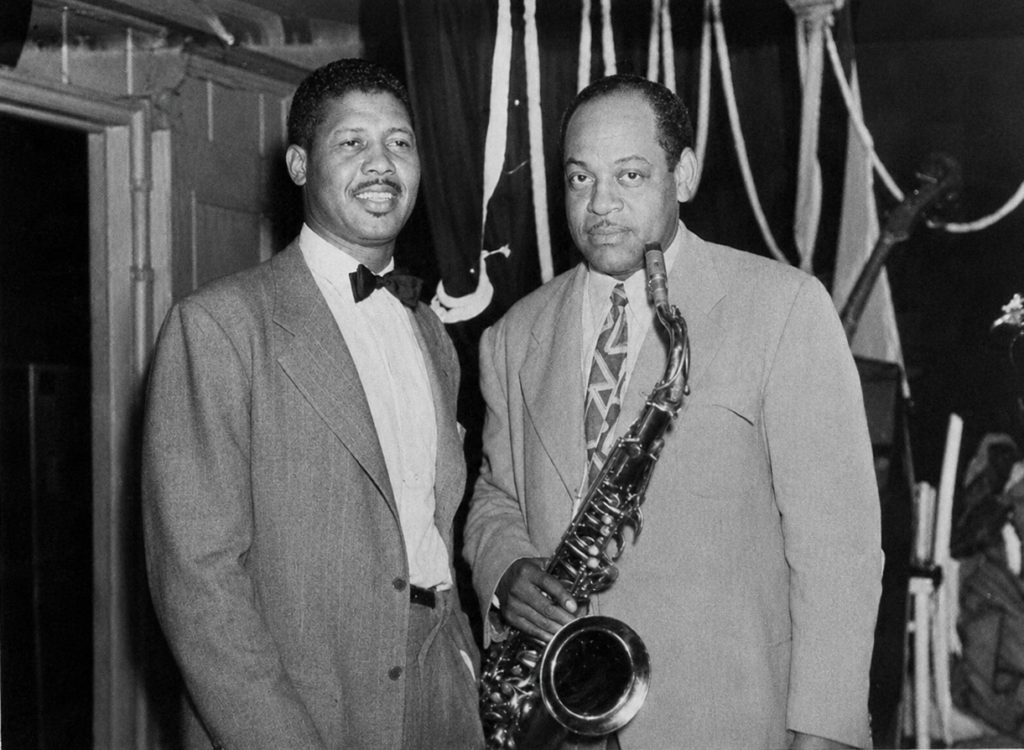
“Broke But Happy”
“Broke But Happy,” a jump tune composed by Walter Foots Thomas, could sum up his year 1944 rather well. Recorded for the Celebrity label and released in May, with Ben Webster, Bud Johnson, Emmett Berry, Clyde Hart, Oscar Pettiford, and Cozy Cole. Yes, he earned less than he had in Calloway’s band, but he gained real recognition from his peers, secured a good contract with Joe Davis (even if he later got shortchanged), and earned solid royalties on his new records with his own name on the label. And that last detail could change everything for a man who had spent 15 years as the section player in a big band…
Last aRRANGEMENTS and recordings
Teaching and writing did not prevent Walter Thomas from continuing to be active in show business. For instance:
• Every Sunday in 1945, he headed the jam session at Pied Piper in Greenwich Village;
• He provided arrangements for two obscure all-girl bands: Chicagoan Joan Lee’s (January 1945), and The Honey Tones, featured at the Circle Lounge in Vineland, NJ (Fall 1946);
• On September 17, 1945, Walter Thomas accompanied two successful vocal groups: the 5 Red Caps and the Magnolia Five (in fact, the Red Cap Trio augmented by Walter Thomas and Reginald Merrill;
• In 1945, Walter Thomas recorded 4 sides for Majestic, directed by Earl Bostic.
• Another session on alto with Miss Rhapsody (aka Viola Wells) for Savoy in May 1945;
• He’s called again in 1946 by Cozy Cole for a Continental session with Don Byas, who takes all the solos;
• Another session on tenor with another tenor, Joe Thomas (not his brother), for King in 1951;
• The last session will be with the singer Annie Laurie in December 1953, in the company of Al Sears, who takes the solos… Once again, Walter remains discreet.
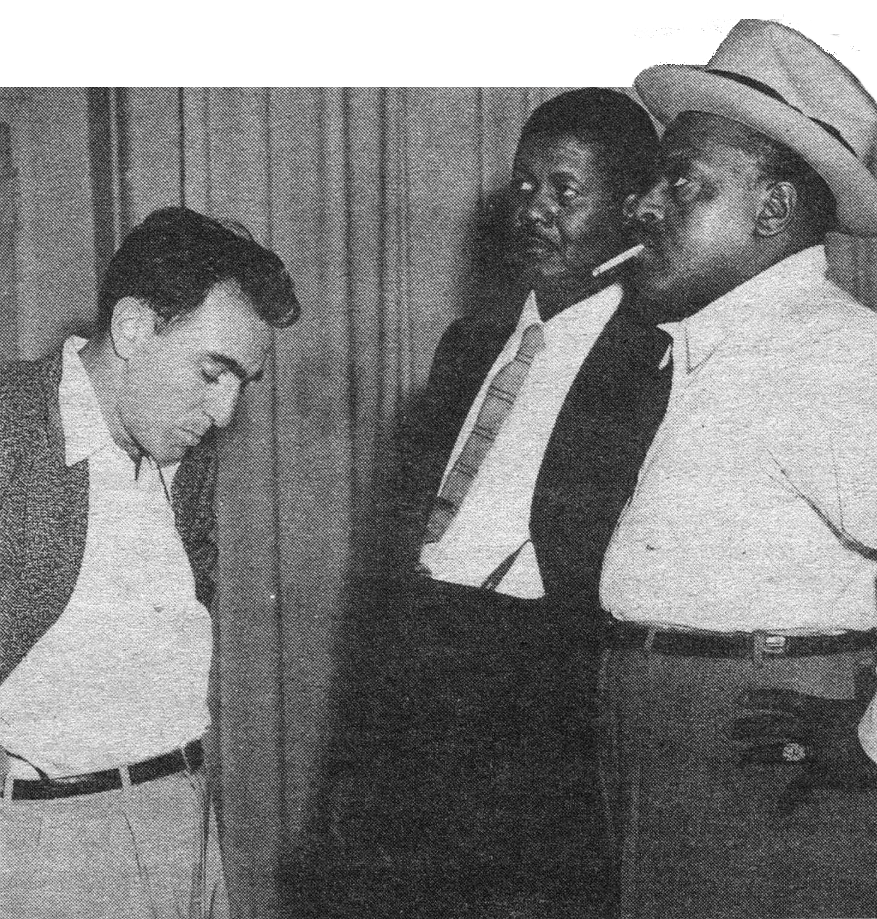
A musician, agent for musicians
From 1948 onward, Walter Thomas ceased his full-time musical activities to devote himself essentially to his mission as an artist’s agent. He worked notably for the Billy Shaw agency.
Cecil Taylor remembers Walter Thomas as an artist’s agent who was little motivated and little inclined to listen to musical innovations. In 1952-1953, the pianist was playing with Kenny Hyers (saxophone), Earl Griffith (vibraphone), Jack Wilson (drums):
“We had had an audition with Foots Thomas for an engagement but it didn’t work out. Foots Thomas was a former saxophone player, had his office in the Strand Building, I think; the kind of guy who promised the moon, if you see what I mean. He told us we had to change our way of doing things if we wanted to get engagements through him. I remember Kenny had written a beautiful variation on ‘Sweet Georgia Brown’; it started with the modulations and then went back to the theme. When we played it, it knocked us all out. Foots said: ‘But what are you playing for me there?’ It was always like that with him.”
Walter Foots Thomas was nonetheless the agent of Ben Webster and Dizzy Gillespie (for one year in the 1970s), as well as Vi Burnside, Bill Doggett, and Bill Davis.
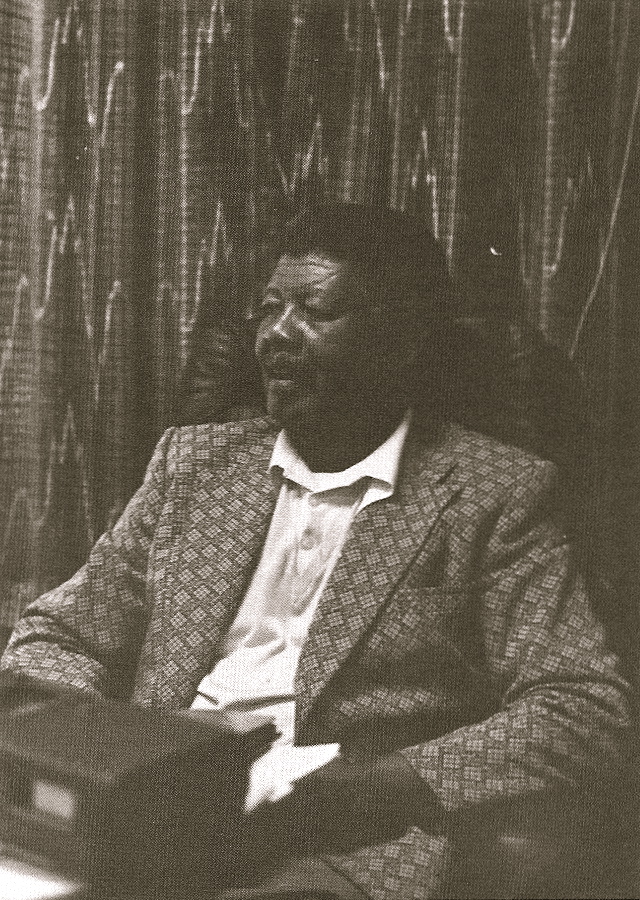
Last years in Englewood, remembering old times with old friends
In 1957, Eddie Barefield rehearsed a band of Cab Calloway alumni, but not for the touring Cotton Club Revue. It consisted of Emmett Berry, Lammar Wright, and Ed Lewis on trumpets; Tyree Glenn and DePriest Wheeler on trombones; Walter Foots Thomas and Hilton Jefferson on tenors; and Milt Hinton and Cozy Cole… But the world of music was gradually moving away from Walter Thomas, unless it was the other way around. His last recording session is dated December 31, 1953, four songs by blues singer Annie Laurie. He was in good company since old mates from the Calloway years were in the studio too: Eddie Barefield and Tyree Glenn.
He found a new hobby in golf. And that’s on a course where he suffered a heart attack in June 1970. His wife Marlyne died in 1972, leaving one son, Dudley, and two daughters, Cleora and Theresa.
On July 4, 1973, Walter Foots Thomas worked for one last day with his former boss, Cab Calloway, during the Newport-New York Jazz Festival for « Jazz Jamboree, » a tribute to Louis Armstrong. That was an all-star night of performances with everyone who played with Satchmo.
In 1975, a stroke partially paralyzed him and prevented him from touching his instrument again until the end of his days. During an interview in 1978, he declared that he was writing a booklet of saxophone duos and an exercise manual. He then seemed still to be active, even if reduced, in his role as an artist’s agent. In the same interview, he explained,
« Working as a booker allows him to stay in the business, and in an area with which he is familiar. He believes that he has something special to offer fledgling musical groups because he « knows the country, the problems of being on the road, and how bands should dress and behave. »
Like many jazz musicians of the great era, Walter Thomas had a mixed opinion about those of the new generation. But he loved Miles Davis above all, considering that he never imitated. Dizzy Gillespie also found favor in his eyes. Let us further specify that they played together for nearly two years between 1940 and 1941 (even if, at the time, Foots did not understand why he played so many notes!).
Religion took a larger space in Walter’s life. Being a Christian Scientist really changed his life; he admitted that it also enhanced his musical abilities, « because it taught me where my thoughts come from. » Spirituality is common among jazz musicians. He explained:
At one time everybody in Calloway’s band was a Mason. Now, that isn’t a religion, but much of it is based on the Bible. Being a Mason kind of wakes you up to the Bible, so to speak. Jazz musicians need some understanding of life, like everyone else.
Since the 1940s, he had been living in Englewood, New Jersey, where a “colony” of musicians made their home: Edgar Sampson, Al Hibbler, Lawrence Brown, John Levy, Arnett Cobb… His place was a few steps from his old friend Tyree Glenn, with whom he spent a lot of time in retirement. And it was there that he passed away from cancer, forgotten by many, on August 26, 1981. A few weeks earlier, in an interview with Steve Voce, Milt Hinton explained that Foots was ill but that he regularly came to Mona and Milt’s for dinner. In any case, those from Cab’s orchestra had not forgotten him…
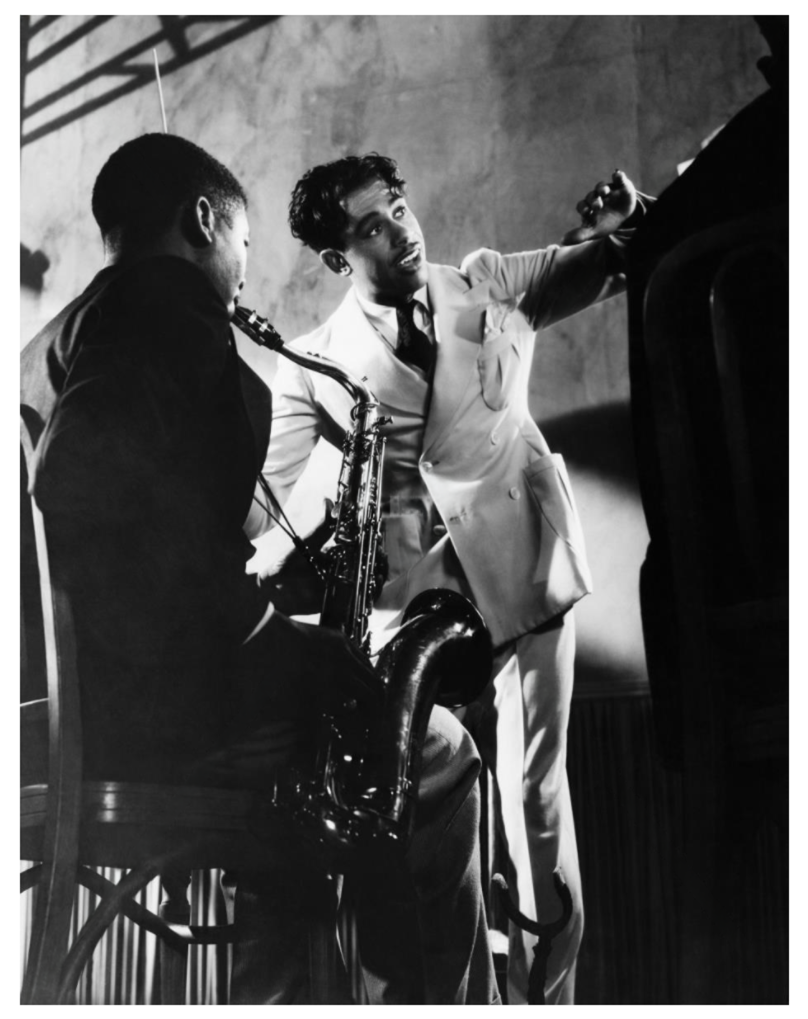
Some tracks to hear again, with a keen ear for Walter ‘Foots’ Thomas:
(†) Jan Evensmo, the famous solographist, wrote about ‘Foots’: « Several competent tenorsax pieces but none to give Walter Thomas a real breakthrough as a major soloist. » Yet, I would add that all worth a listen!
- Prohibition Blues (February 17, 1930): Walter Thomas is the composer-arranger and takes a baritone solo on this Missourians record.
- Saint James Infirmary (December 23, 1930), for its remarkable baritone sholo that “even Harry Carney would have had trouble equaling!” according to Steve Voce (1957).
- Farewell Blues (March 9, 1931), almost an instrumental by the band that features its best soloists.
- Bugle Call Rag (September 23, 1931), for Cab’s « Talk to me, Foots »!
- You Dog (Oct 12, 1931)
- Somebody Stole my Gal (October 12, 1931), « Big Foots’s job! » says Cab before a 16 bar-solo.
- You Gotta Ho-De-Ho (June 9, 1932), for thinking about the Betty Boop cartoon.
- Hot Toddy (September 21, 1932), for the brilliant arrangements and the rapid solo.
- Avalon (September 3, 1934), for its flute solo, in the company of Morris White on guitar.
- Some of These Days (recorded for Al Jolson’s « Shell Château » radio show on January 25, 1936): splendid flute solo, the same than in the 1937 movie « Hi-De-Ho. »
- F.D.R. Jones (November 2,1938), for its rather Hollywood treatment of the arrangements that enhance Chu Berry’s solo (according to Loren Schoenberg in his notes for the booklet of the Chu Berry box set on Mosaic Records).
- Boog It (July 27, 1940), featuring twice as many bars as were allotted for the studio recording—this broadcast captures one of the very few solos recorded by ‘Foots’ during his time with Chu Berry in the orchestra.
- Chant of The Jungle (July 27, 1942), for the longest tenor sax solo (32 bars!) recorded by Walter Foots Thomas on a title that was… rejected by Columbia!
- Redman Blues (November 12, 1943), with Don Redman and his Orchestra, for a surprising groovy solo!
Sources
- Cab Calloway, Of Minnie the Moocher and Me
- Lowell D. Holmes and John W. Thomson, Jazz Greats, Getting Better With Age
- Cleora Butler, Cleora’s Kitchen
- Milt Hinton, Bass Line
- Gunther Schuller, Swing Era
- Stanley Dance, The World of Swing
- William Howland Kenney, Jazz on The River
- Aleisha Ward, Walter Foots Thomas’s Profile, Flute Focus magazine, 2009
- Chan Parker, My Life in E-Flat
- “Cab Calloway,” volumes 1 and 2, Masters of Jazz (discographical indications by Marc Richard and Dan Vernhettes)
- Peter Guidi, « A Short History of the Jazz Flute, » FluteHistory.com
This article could not have seen the light of day without the spontaneous help and friendly support
of (†) Yvan FOURNIER. May he be thanked here for his discographical contributions and the acuity of his encyclopedic memory.
Thanks to Professor Aleisha Ward, University of Auckland, for sharing her article about Foots and flute.